The world that moves fast and scrolls even quicker, people’s interaction with the internet has evolved into something that is mobile-dominated.
Whether it is checking emails on the metro or buying groceries from your bed, smartphones have a go-to way to access the web for services. In 2024, over 6.6 billion people use smartphones, which is close to 83% of the global population, and the number is growing tremendously.
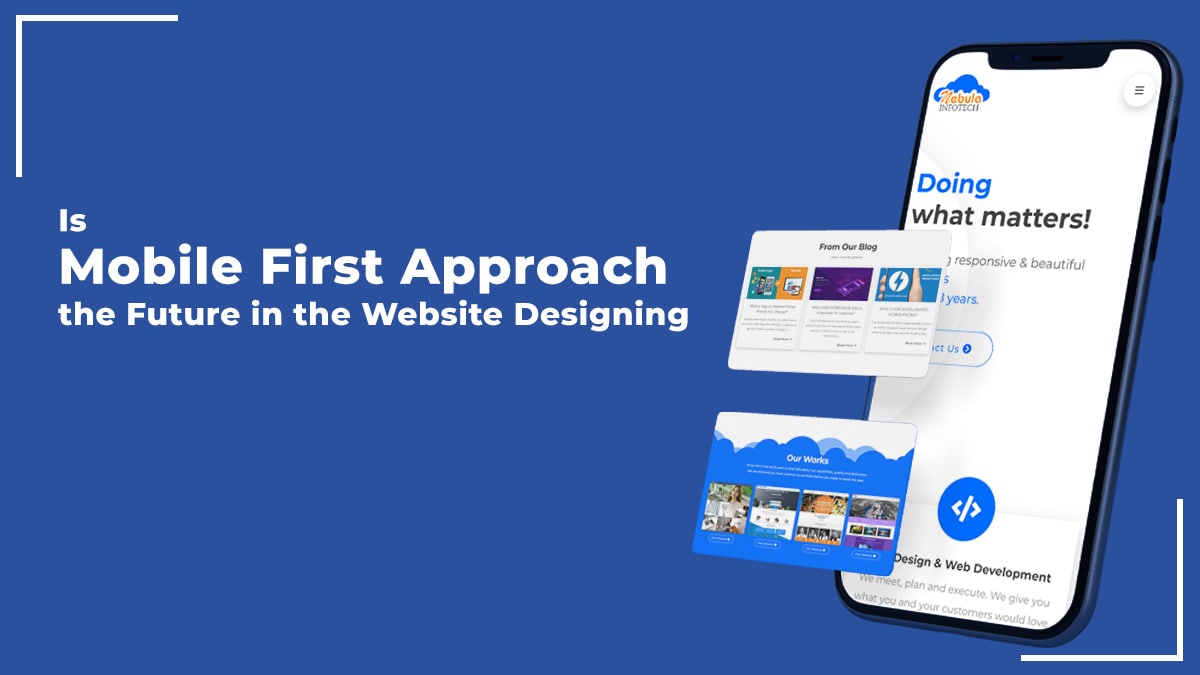
As the shift is happening, businesses, developers, and designers are facing a crucial question: Is the Mobile-first approach the future of website design?
Well, the answer (in short) is Yes, which is why you should not ignore this.
What Is a Mobile-First Approach?
Traditionally, website design on desktops which by default creates websites from a desktop perspective. Developers build a full-fledged desktop site first and then trim the website to fit smaller screens.
This was fine until the smartphone revolution kicked in after 2010, to be specific. After 2010, slowly and tremendously, smartphone domination in web traffic began.
Now, in 2026, it is the mobile-first strategy that a web designer keeps in mind whenever he/she is designing the website.
It flipped the old method and began a new paradigm for web designers. Instead of removing content or functionality for mobile, you build for mobile first, and then enhance the experience for tablets and desktops.
It’s not just a design trend. It’s a mindset.
Why You Should Embrace Mobile-First Design?
Here are some of the reasons why you should embrace mobile-first design-
Google Ranks Mobile First
Since Google is 80% of web surfing, it is crucial to comprehend that the recipe to success in web ranking is to follow Google’s guidelines.
Google has officially adopted mobile-first indexing, which means that when Google crawls your website. It checks for the mobile version of your website first and then indexes the desktop version.
If your mobile version is slow or unresponsive, it will be ranked lower, and you have a risk of dropping in the ranking.
“Starting July 1, 2019, mobile-first indexing is enabled by default for all new websites.” — Google Search Central.
So, if you want to invest in website design, go for mobile-first designs, and it is not optional anymore, but an absolute necessity.
Better Conversion Rates on Mobile
The reality of websites is that a beautiful website does not mean it converts. With mobile traffic making up to 55% of global traffic, it is no surprise that mobile conversions are climbing too, but like any conversion system, it only works if the entire experience is smooth.
If you run digital marketing advertisements keeping your landing page non-responsive, this large mobile user base will kill your ROI.
Here are some of the tips that might help you in getting more conversions-
- Buttons should be thumb-friendly. We use our thumbs to operate smartphones, so if you create things thumb-friendly, you can offer a good experience to users.
- Forms and CTA should be smooth and easy to fill out.
- The loading speed of the website should be fast.
Remember, people abandon websites that they find hard to use, so keeping your website’s mobile-first layout is designed with accessibility, speed, and user flow in mind. This results in more clicks, more purchases, and more engagement.
Everyone Has a Smartphone
Take a quick look around, and notice one thing? – Everyone around you is using a smartphone. Whether you are in a café on a train or even at your home, everyone is glued to their phone.
Now, mobile is not just a device, but it is a default medium of browsing, shopping, booking appointments, etc.
Ignoring mobile is like building a billboard in the middle of a deserted island. Designing your website as a mobile-first design ensures your message reaches people where they are.
Thumbs Rule the UX World
This may sound simple, but it can make or break your mobile UX. 80% of the mobile interaction happens using thumbs. This means your CTA buttons, navigation menus, and form fields need to be easily reachable, preferably within your thumb zone.
Mobile first mindset forces you to think about user ergonomics and not just aesthetics. This directly translates into usability, and usability translates into customer satisfaction.
Data Doesn’t Lie: Mobile Is the Future
The easiest way to make any decision is to look at the Data. The Data clearly would tell you where to put your eggs. Here are some of the few compelling stats to chew on-
- Over 70% of e-commerce traffic comes from mobile devices
- 60% of Google searches happen on mobile
- Mobile bounce rates are higher when websites are not optimized for small screens
As the data suggests, the user prefers a smartphone over a desktop. As the innovation in mobile tech, i.e., faster chips, better display, 5G, etc., mobile will continue to dominate. Designing for desktop first comes with no future proofing.
Faster Loading = Better Performance
Fast-loading websites tend to rank higher and work faster on mobile devices as well. From a mobile-first perspective, your focus should be on making your website load fast.
The loading time of the website depends on how graphics-intensive the design is, how many files and lines of code the website has, and whether the images used in website design are heavy.
Mobile first requires leaner code, lighter images, and fast performance to work seamlessly. You have to keep a simple design as your goal over a highly graphical design to ensure your website works fine.
This also offers you better scores on Google PageSpeed Insights and a smoother experience for users, especially in areas with slower internet, as speed directly impacts SEO and conversion.
It Enhances User Experience (UX)
Mobile-first design is all about being intentional. You have to plan what your user needs and eliminate anything that doesn’t serve the goal. Here are some of the user experience decisions that you have to make-
- You have to prioritize content hierarchy to ensure the user finds it easy to find information
- Simplifying navigation helps in navigating through the website
- Create an intuitive interface to add reliability and a trust factor within your website
When you implement the above recommendation, the result that you’ll get is phenomenal. User spends more time on your website, has a lower bounce rate, and is more likely to return in the future.
In the online space, a good UX is a superpower. The old method would not work efficiently. Scales down from a desktop, removes clutter, and becomes an afterthought instead of a central strategy.
What About Desktops?
The more important question is what about desktop design, let’s be very clear: desktops insn’t dead. In fact, for some industries like B2B software or enterprise dashboards, desktops are still essential.
The idea of mobile first is not to ignore desktop but to make sure that your design functions well on mobile first, and scale up with richer features for longer screens.
How to Start Building Mobile-First
Here’s how you can start building a mobile-first website design-
- Sketch for mobile layout first: The very first step is to sketch for mobile layout first, to ensure you plan before beginning coding.
- Design for Thumb Reach: Keep CTAs within comfortable areas of the screen, allowing users to comfortably use the website.
- Prioritize speed and load time: Website Speed is the most important thing, so keeping the page size on the lower side allows you to speed up the loading speed. To achieve that, you can optimize images, defer scripts, etc.
- Use Responsive Framework: Frameworks like Bootstrap, Tailwind, or custom CSS Grid, etc., are responsive frameworks, which means the website design will be mobile-friendly.
- Test: Test in the real environment instead of emulators, as emulators aren’t always accurate
Final Thoughts
The mobile-first approach is not just a tech trend but a necessity. Users aren’t sitting at desks all the time but are carrying miniature computers in their pocket, which gives them access to the internet.
The mobile device provides easy and fast access to the internet. With these market forces in play, you have to design the website as mobile-first. The new standard is clear: think mobile-first and build experiences that meet users wherever they are.

I am Sunil Tarwara, a seasoned IT professional with over 13 years of hands-on experience in Website Development and Digital Marketing. With a deep understanding of the challenges faced by businesses, I have been trusted by hundreds of clients to achieve their digital goals. I have Master’s degree in Information Technology.
Apart from websites, I like hill stations.